
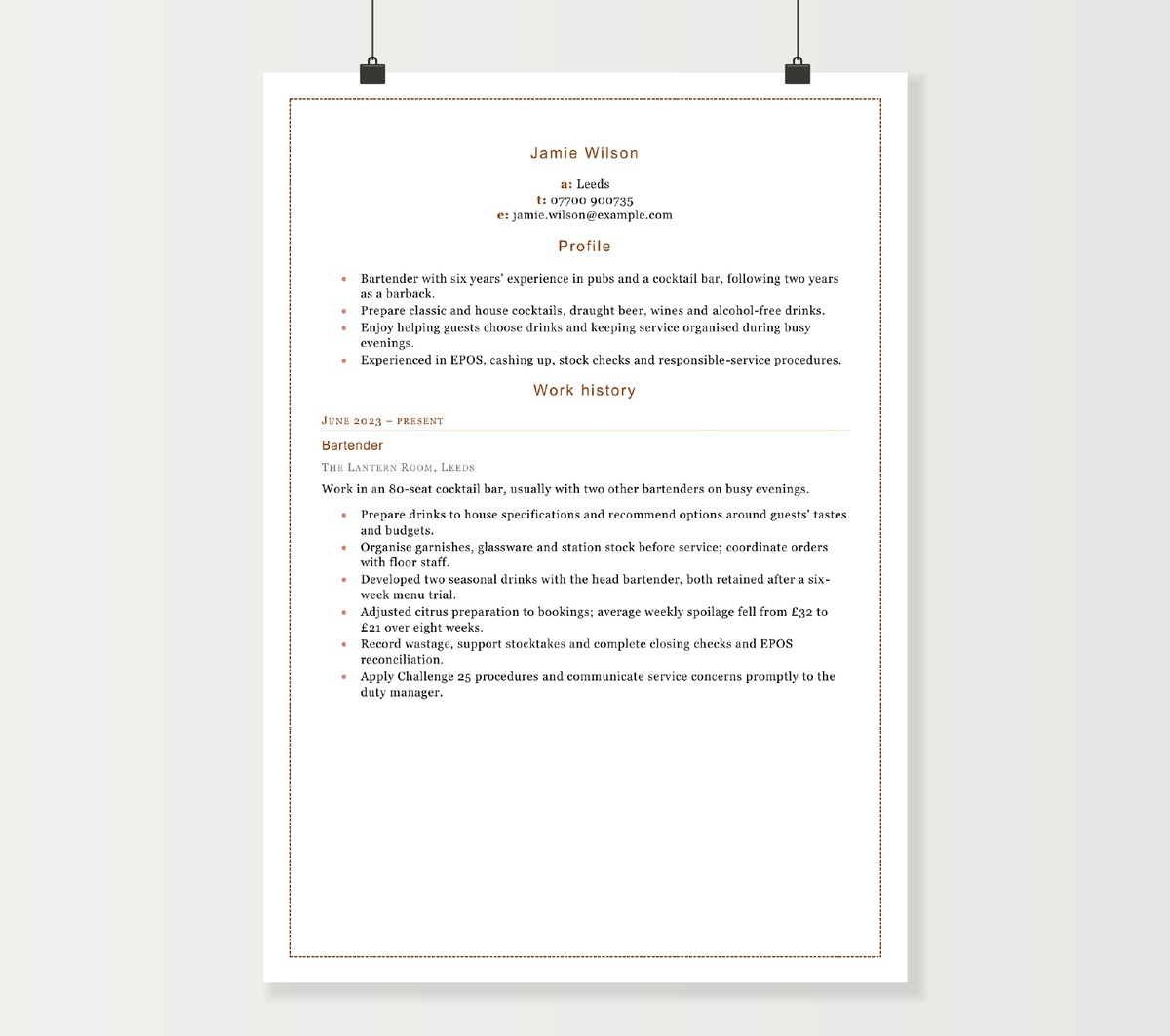
This bartender CV template follows a candidate who progressed from barback to pub and cocktail-bar work. The Word example covers drinks preparation, guest recommendations, stock routines and practical improvements behind the bar. The guide explains how to present experience for pubs, cocktail bars, hotels and events, including a first bartending role or a move into senior service responsibilities.
Filename: FreeCVDownload_Bartender.docx
Content of this CV template
Jamie Wilson
a: Leeds
t: 07700 900735
Profile
- Bartender with six years’ experience in pubs and a cocktail bar, following two years as a barback.
- Prepare classic and house cocktails, draught beer, wines and alcohol-free drinks.
- Enjoy helping guests choose drinks and keeping service organised during busy evenings.
- Experienced in EPOS, cashing up, stock checks and responsible-service procedures.
Work history
June 2023 – present
Bartender
The Lantern Room, Leeds
Work in an 80-seat cocktail bar, usually with two other bartenders on busy evenings.
- Prepare drinks to house specifications and recommend options around guests’ tastes and budgets.
- Organise garnishes, glassware and station stock before service; coordinate orders with floor staff.
- Developed two seasonal drinks with the head bartender, both retained after a six-week menu trial.
- Adjusted citrus preparation to bookings; average weekly spoilage fell from £32 to £21 over eight weeks.
- Record wastage, support stocktakes and complete closing checks and EPOS reconciliation.
- Apply Challenge 25 procedures and communicate service concerns promptly to the duty manager.
August 2020 – May 2023
Bartender
The Hawthorn Arms, Leeds
Served a neighbourhood pub with dining, live music and private functions.
- Served draught beers, wines, spirits and a short cocktail menu.
- Built relationships with regulars and explained guest ales and seasonal drinks.
- Prepared and ran function bars for parties of up to 80 guests.
- Handled cash, cards and split bills, referring discrepancies to the shift supervisor.
- Trained four colleagues in tills, drinks presentation and closing routines.
- Checked deliveries, rotated stock and assisted with cellar and line cleaning.
May 2018 – July 2020
Barback
The Hawthorn Arms, Leeds
Supported bartenders and floor staff during evening and weekend shifts.
- Replenished bottles, ice and glassware during service.
- Washed glasses and kept work areas clean and organised.
- Prepared garnishes and restocked fridges.
- Received deliveries and stored stock with the bar team.
- Learned tills and basic drinks service through supervised shifts.
- Promoted after completing the pub’s practical service training.
Training and education
Level 2 Food Safety in Catering | 2023
Allergen awareness, Challenge 25 and responsible service | 2026
8 GCSEs, including English and Maths | Leeds | 2016
Interests
I enjoy five-a-side football, live music and weekend walks.
How to write a bartender CV
A good bartender CV gives the reader a picture of you during service: the drinks you prepare, the guests you look after and the way you keep the bar ready for the next order. Cocktail knowledge matters in many venues, but so do preparation, stock, payments and working smoothly with the floor team.
Lead with the setting that best matches the vacancy. A neighbourhood pub, a late-night cocktail bar, a hotel lounge and a temporary event bar have different service demands. Give your experience a setting, then select the details that show why it is relevant to the next job.
Help the employer recognise the right kind of bar experience
Start each role with the venue type and a little context. The number of seats, the size of the bar team or the type of functions can help explain the service. “Bartender in an 80-seat cocktail bar, working with two colleagues on busy evenings” is more informative than “worked in a busy environment”.
Choose the emphasis to suit the application:
- Pubs: draught products, regular customers, food orders, cellar routines and a varied pace of service may be central.
- Cocktail bars: classic and house recipes, preparation, product knowledge, presentation and the contribution you make to the menu deserve space.
- Hotels and members’ clubs: personalised recommendations, discreet service, room or member billing and coordination with other departments can be especially useful.
- Events: setting up a temporary station, preparing for concentrated demand, coordinating replenishment and working to an event schedule help explain your experience.
You can bring experience from more than one setting into a strong application. Make the connection explicit: a pub bartender moving into a hotel may have relevant wine service, functions and guest-recommendation experience even if the venue has a different style.
Describe drinks knowledge through the work you do
Give the reader an accurate sense of your range. You might prepare a full classic cocktail list, work from a small house menu, serve cask and draught beer, recommend wines or make a substantial range of alcohol-free drinks. These are useful distinctions and often more informative than calling yourself a mixologist.
For cocktail experience, describe the menu or service responsibility rather than listing dozens of recipes. An entry such as “Prepared classic and house cocktails to agreed specifications, with responsibility for garnish preparation and the service station” shows both drinks knowledge and the work around it.
If you contributed to new drinks, explain what happened to them. Developing two options that were selected for a seasonal menu is a useful outcome. Mention recipe documentation, costings or team tastings where you were involved, particularly for senior roles. The CV needs to explain your contribution; the recipes themselves can be discussed at interview.
Specialist knowledge can strengthen an application when it suits the venue. Examples include whisky, local beers, wine service, coffee or a strong low- and no-alcohol offer. Pair the specialism with how you use it: helping guests choose, briefing colleagues, preparing a tasting or supporting a menu change.
Show what good guest service looks like in your work
“Excellent customer service” is easier to assess when the CV gives an example. You may guide a guest towards a drink based on flavour preferences, remember regular orders, handle an unsuitable drink calmly or coordinate with a server when a table needs attention.
Choose evidence that fits the venue. A cocktail-bar application may benefit from explaining how you introduce unfamiliar drinks. A hotel application may emphasise attentive service, guest preferences and working with restaurant or reception colleagues. A pub application can show the balance between regulars, new visitors and a busy bar queue.
Commercial awareness belongs here too. Recommending an appropriate drink, explaining premium options or helping a guest choose a flight can support sales while improving the experience. If you have a recorded result, describe the menu item, period and your contribution. Where that information is unavailable, the responsibility itself can still be specific and useful.
Languages can matter in hotels, tourist areas and international events. State the language and the level at which you use it, such as handling drink orders and straightforward guest enquiries. That gives the employer more context than a flag icon or an unexplained proficiency score.
Give preparation, stock and closing duties proper weight
Much of a smooth service is decided before the first order. Describe your part in preparing garnishes, checking glassware, setting stock levels, preparing house ingredients or organising a service station. Mention how you coordinate with barbacks and other bartenders when that is part of your role.
Stock experience can range from replenishing fridges to placing orders and reviewing variances. Identify your level: receiving deliveries, rotating products, recording wastage, counting stock, flagging shortages or deciding quantities. A head bartender’s application may need more detail on counts and team routines than a first bartender application.
The example CV links citrus preparation to a modest reduction in spoilage. It explains the practical change and the period measured. Other useful evidence could include fewer shortages during functions, a clearer preparation checklist or a storage change that helped colleagues find stock during service.
Closing responsibilities also indicate trust. Include cashing up, cleaning checks, securing stock, preparing the next shift’s handover or acting as a keyholder where relevant. Keep the description at the level of responsibility; a CV does not need the venue’s detailed security procedure.
Include tills, payments and responsible service in context
Name a till or point-of-sale system when you have used it regularly and the vacancy makes systems experience relevant. Explain the functions you handled: entering orders, managing tabs, splitting bills, taking cash and card payments, processing authorised adjustments or reconciling a till at close.
For hotel work, room charging and communication with reception can be useful distinctions. For event work, describe whether you worked a cash bar, a prepaid package or a hosted service. These details show the kind of billing arrangements you understand without turning the CV into a systems manual.
Responsible-service experience can sit naturally alongside guest service. A concise reference to age-verification procedures, handling refusals with the duty manager or recording incidents demonstrates relevant experience. Recent allergen and hygiene training also belongs in the CV, particularly where you prepare fresh ingredients or answer questions about drinks.
List a personal licence separately from the qualification or course used to obtain it. For the England and Wales framework, GOV.UK’s alcohol licensing guidance explains the distinction between licence holders and staff authorised to make sales. The CV’s task is to make your training and responsibilities clear, with the appropriate local arrangements considered for the role.
Choose achievements that reflect bar work
A bartender’s contribution may be easier to demonstrate through service, preparation and team development than through a headline revenue figure. Useful examples include a drink adopted for the menu, training colleagues to work a station independently, helping deliver a large function or improving a stock routine.
Give figures a practical context. A function for 80 guests tells the reader about the event, but the entry is stronger if it also explains your preparation and service responsibility. A reduction in wastage becomes more meaningful when you identify the product, the change and the period reviewed.
Guest feedback can support an achievement when it relates to your own service. For instance, repeated positive mentions in the venue’s feedback system can demonstrate a strength in recommendations or hospitality. Keep the emphasis on what the feedback recognised, rather than filling the CV with quotations.
Team results also belong on the CV when your part is clear. “Helped train four new colleagues in till use and closing routines” shows a contribution to the team without requiring a supervisory title. A senior bartender might add how they checked readiness or followed up training during later shifts.
Present a first bar role or a move up the team
From barback, waiting or other customer-facing work
Barback experience is directly relevant. Show how you kept stations supplied, maintained glassware, supported preparation and learned service routines. Any supervised drinks service or till training can demonstrate progression towards bartender responsibilities.
Waiting, café and retail experience can contribute evidence of handling orders, payments, queues, customer questions and busy shifts. Select the parts that transfer to the bar. A first-role profile can focus on this experience and relevant training, followed by examples that show reliability and teamwork in practice.
If your experience combines drinks and table service, the waiting-staff CV example can help with presenting the wider front-of-house role. Keep the bartender application centred on the work the new venue needs.
Senior bartender and head bartender applications
Show the additional responsibility as well as your drinks knowledge. Explain how many colleagues you supported, whether you led a service, briefed the team, trained new starters, helped develop menus or dealt with guest concerns.
Separate service leadership from wider management responsibilities. If you also prepared rotas, placed orders, reviewed costs or recruited staff, those details deserve space. If your role concentrated on running the bar during service and coaching colleagues, that is a clear and valuable level of experience in its own right.
Progression within one venue can be presented under a shared employer heading, with role titles and dates beneath it. The reader can then see how your responsibilities developed without reading the same venue description several times.
Keep training and availability useful to the employer
Include relevant hospitality qualifications, food-safety training, allergen updates, drinks courses and workplace development. Give the title and year, and distinguish a completed qualification from informal product training. A recognised wine or spirits award may be especially useful for a venue with that focus, while recent practical training can be more relevant to another bar.
Education can be brief once you have substantial experience. A first-time applicant may give a little more space to relevant study or organised activities that involved customer contact and teamwork. The main evidence should still help the employer understand your readiness for the service.
Make working arrangements easy to understand when they affect the application. State part-time, weekend or seasonal availability where relevant, and give a notice period if requested. For venues with late finishes or limited public transport, a concise explanation of reliable travel arrangements can resolve a practical question.
Use the CV template collection if you want a different layout for your balance of roles and training. Whichever design you choose, the most useful information is the same: the kind of bar experience you bring, what you contribute during a shift and how you have developed.
Bartender CV FAQs
Not every bartender vacancy requires one. In England and Wales, staff can make alcohol sales when authorised by a personal licence holder; some employers still prefer applicants to hold their own licence, particularly for senior roles. State a licence you hold separately from any licensing qualification or training. Requirements and arrangements differ across the UK, so use the vacancy and the relevant local licensing guidance for the role’s location.
Group assignments under the agency or event employer, give the overall dates and identify the work as casual, seasonal or fixed term. Add selected events or venue types and explain your responsibilities. This keeps the timeline readable when shifts overlap with another job and allows you to show experience of setup, peak service and closing without a separate entry for every event.
Yes. Lead with the closest experience: cocktails on your existing menu, measured service, preparation, guest recommendations and working accurately under pressure. Add relevant practical training and any drinks-development work. Your pub experience can also demonstrate tills, stock and customer relationships, which remain useful in a cocktail setting.
A short summary usually works better than a long quotation. Explain what the feedback recognised, such as attentive recommendations or calm handling of a problem. If your venue has a formal recognition scheme, give the award or recognition and date. A link or supporting extract can be supplied separately if it is useful later in the application.
For a role involving menu development, a small selection can help if the employer welcomes supporting work. Label the venue or project, the drinks you contributed and your role in their development. Keep the CV focused on experience and send menu or photographic evidence separately, following the application instructions. Most general bar applications do not need a portfolio.
It depends on the venue. A specialist course can add useful evidence for a wine-led or cocktail-focused role, but many employers also value practical service experience and workplace training. Give the course’s exact title and completion date, then show where you have applied the learning. For a first role, customer-facing experience and evidence of learning service routines can be equally useful parts of the application.




