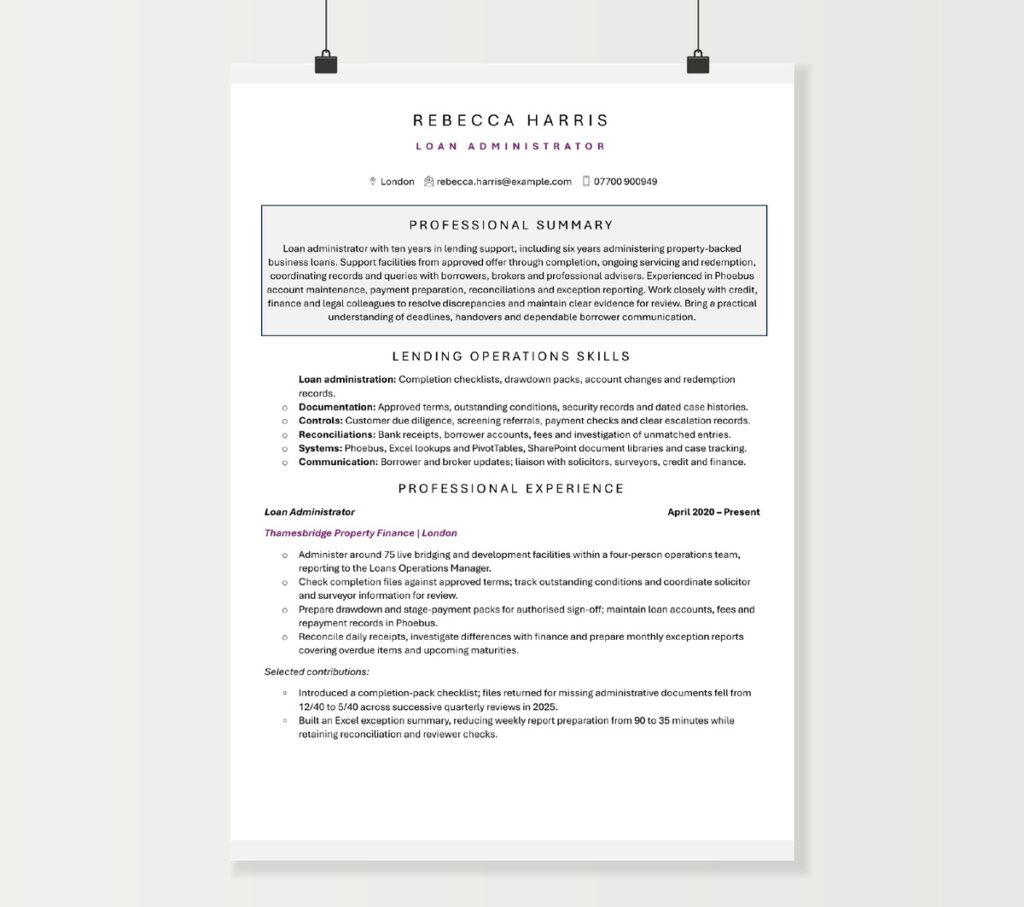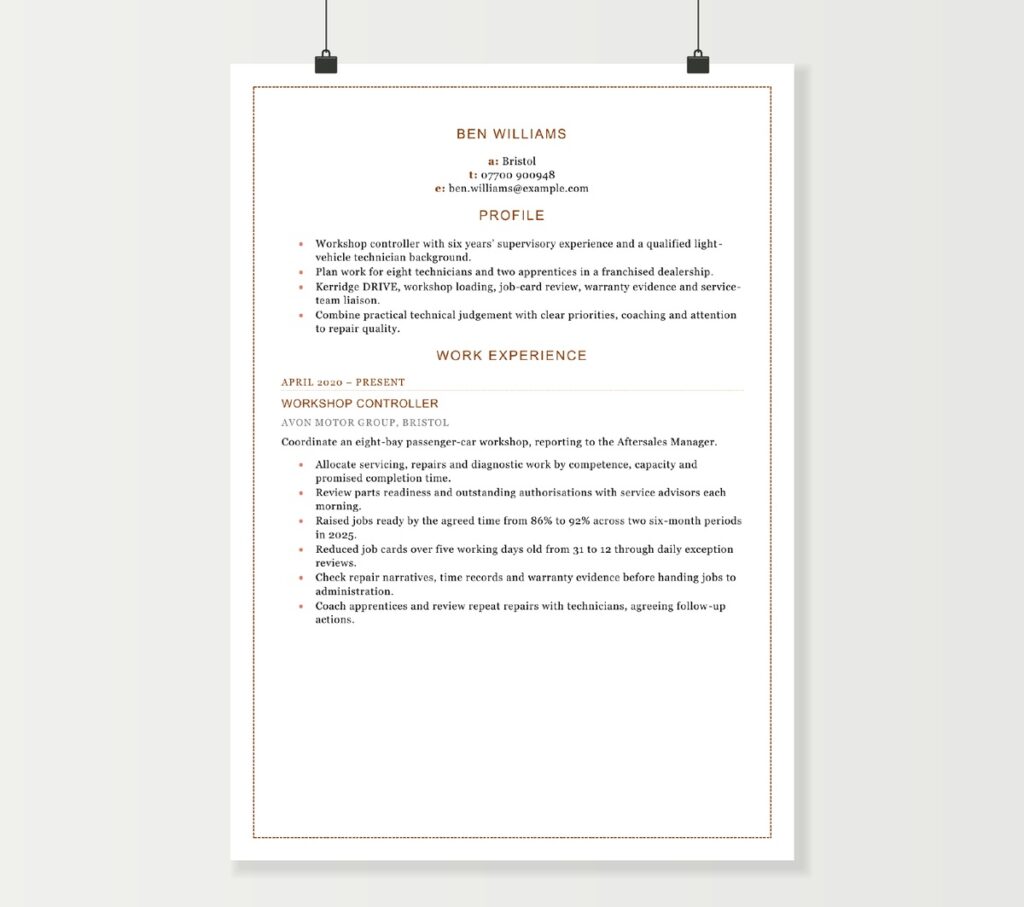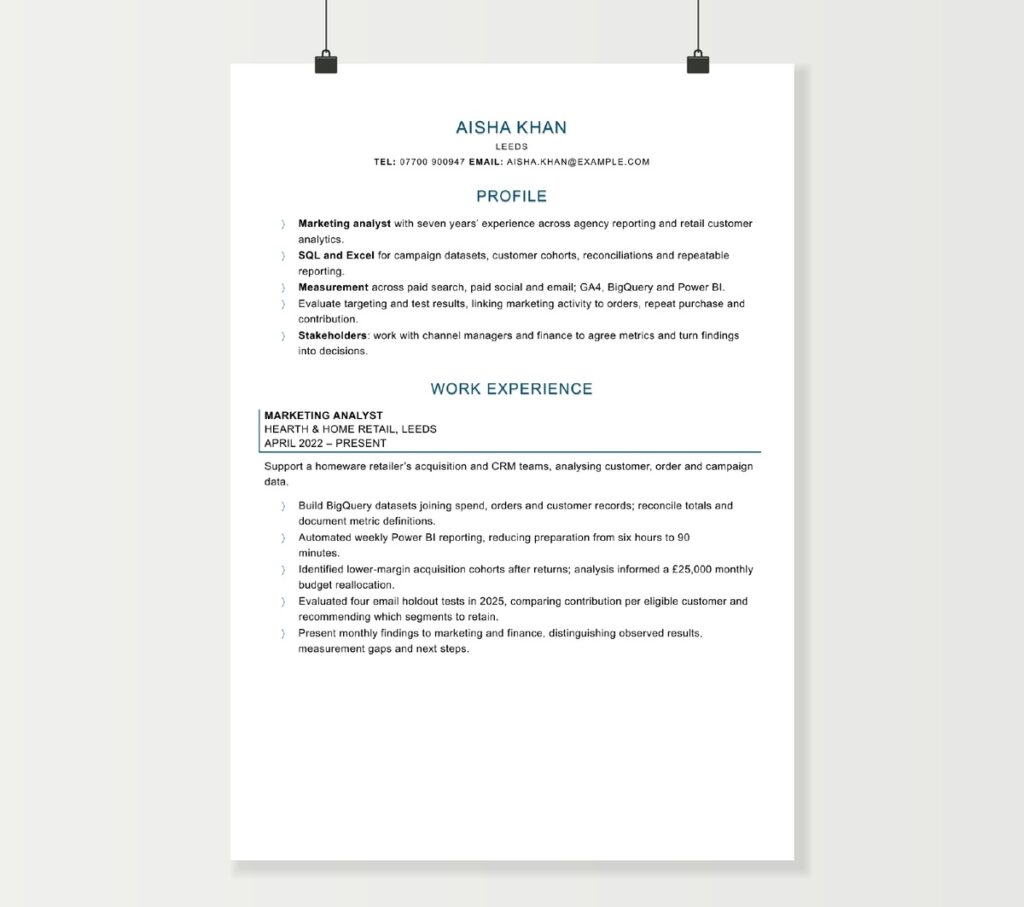

This simple British CV template follows the UK format for a CV, with the usual sections that are expected by employers. Its simple layout avoids shapes and decorative graphics, but recruitment systems vary. Follow the employer’s file instructions and check any information extracted from your CV. Although this CV includes example content for an admin role, it is suitable for practically any position, including headings for all the expected sections of a typical British CV.
Filename: FreeCVDownload_9.docx
Content of this CV template
JAMES CARTER
17 Willow Close, Nottingham NG5 1JL tel: 07891 654321 email: [email protected]
PROFILE
- I am a dedicated and detail-oriented administrative professional with 3 years of experience providing HR and office management support in a fast-paced corporate environment.
- I am proficient in HR systems, data entry, and maintaining accurate employee records, ensuring compliance with all relevant legislation and company policies.
- My strong organisational and time-management skills enable me to handle multiple tasks efficiently, from recruitment coordination to onboarding new hires.
- I am passionate about maintaining a positive work environment, providing excellent support to both colleagues and management.
- I am now seeking a part-time Admin/HR Assistant role where I can utilise my skills while contributing to a supportive and collaborative workplace.
WORK HISTORY
HR ADMINISTRATIVE ASSISTANT
RIVERDALE SOLUTIONS, NOTTINGHAM
JULY 2021 – NOVEMBER 2024
My role involved supporting the HR department in managing a workforce of 150 employees. My responsibilities included:
- Maintaining employee records, ensuring data accuracy, and updating the HR system.
- Processing leave requests, sick days, and absence reports.
- Assisting in recruitment processes, including job postings, CV screening, and scheduling interviews.
- Organising HR meetings and preparing relevant reports.
- Managing onboarding procedures and delivering induction sessions for new hires.
OFFICE ADMINISTRATOR
NOTTINGHAM FINANCIAL SERVICES
JANUARY 2019 – JUNE 2021
I worked in a busy office environment, supporting the day-to-day operations. My duties included:
- Handling incoming and outgoing communications, including phone calls and emails.
- Managing office supplies and maintaining inventory records.
- Organising team events and coordinating meeting schedules.
- Assisting the HR team with administrative tasks as needed.
QUALIFICATIONS
DIPLOMA IN HUMAN RESOURCE MANAGEMENT
NOTTINGHAM COLLEGE – JULY 2021
Key modules included employment law, HR administration, and organisational behaviour.
A LEVELS
BUSINESS (A), SOCIOLOGY (B), ENGLISH LANGUAGE (B)
GCSES
9 GCSES INCLUDING MATHS (A) AND ENGLISH (B)
INTERESTS
I enjoy participating in community sports, including local football leagues and charity runs. I also have a keen interest in technology and frequently attend workshops on the latest HR and office management tools to keep my skills current.
How to write a British CV:
In the UK, a CV (Curriculum Vitae) typically follows a standard format designed to present key information clearly and professionally. Here’s what is generally expected:
1. Profile: This is a brief personal statement at the beginning of the CV, highlighting who you are, your key strengths, and what you are looking for professionally. Use a few short, relevant sentences, focusing on experience and skills that match the job advert. Select the useful details from the sample profile rather than copying every bullet.
2. Work History: This section lists past employment in reverse chronological order, starting with the most recent role. Each entry should include the job title, employer’s name, dates of employment, and a few bullet points outlining key responsibilities and achievements. Focus on accomplishments that demonstrate skills and experience relevant to the job.
3. Qualifications: List academic and professional qualifications in order of highest level first. Include degree titles, institutions, and dates. For recent graduates, this section can appear above Work History.
4. Skills (if appropriate): For roles requiring specific skills (such as IT or technical jobs), include a dedicated skills section. Mention relevant proficiencies like programming languages, software expertise, or industry-specific certifications.
5. Interests: Although optional, adding interests can help personalise a CV. Focus on hobbies that reflect desirable qualities such as leadership, teamwork, or dedication.
Additional Tips:
- One or two pages is a useful starting point for most applications; follow any length specified by the employer.
- Use a professional, easy-to-read font.
- Ensure the layout is clear and logically organised.
- Tailor the CV to the specific role by emphasising relevant experience and skills.
- HR staff are busy. Avoid long paragraphs and bold important points. Don’t make them work hard to find that you’re suitable – they may just overlook your CV.
FAQs
While both documents showcase your qualifications, a CV is typically more detailed than a resume. In the UK, CVs often include comprehensive work history and education details, whereas resumes (common in the US) are usually shorter, focusing on key achievements and skills.
A British CV typically includes: Contact details, Personal statement, Work experience (reverse chronological order), Education and qualifications, Skills, Hobbies or interests (optional) and References (optional or available upon request).
One or two pages suits many UK applications, focusing on the information relevant to the role. Academic and specialist CVs may need more detail. Follow the employer’s instructions.
No, photos are not standard on British CVs, and including one may result in discrimination so think carefully before choosing a CV template that has a photo.
References are optional and can be omitted to save space. Instead, you can add “References available upon request” at the end of your CV.
Follow the employer’s instructions. Include a cover letter when requested; if it is optional, use one when it adds relevant information rather than repeating your CV.
Many UK employers use applicant tracking systems, but their software and selection processes vary. Use clear headings and accurate, relevant terminology. No layout or keywords guarantee selection; follow the requested file format and check any fields the application system fills in.
Use British English spelling, such as “organisation”. Month/year dates, for example July 2021–November 2024, usually make employment history clear. Keep dates consistent and follow any format requested on the application form.
Including hobbies is optional but can be a good idea if they demonstrate skills or qualities relevant to the job, such as teamwork or leadership.